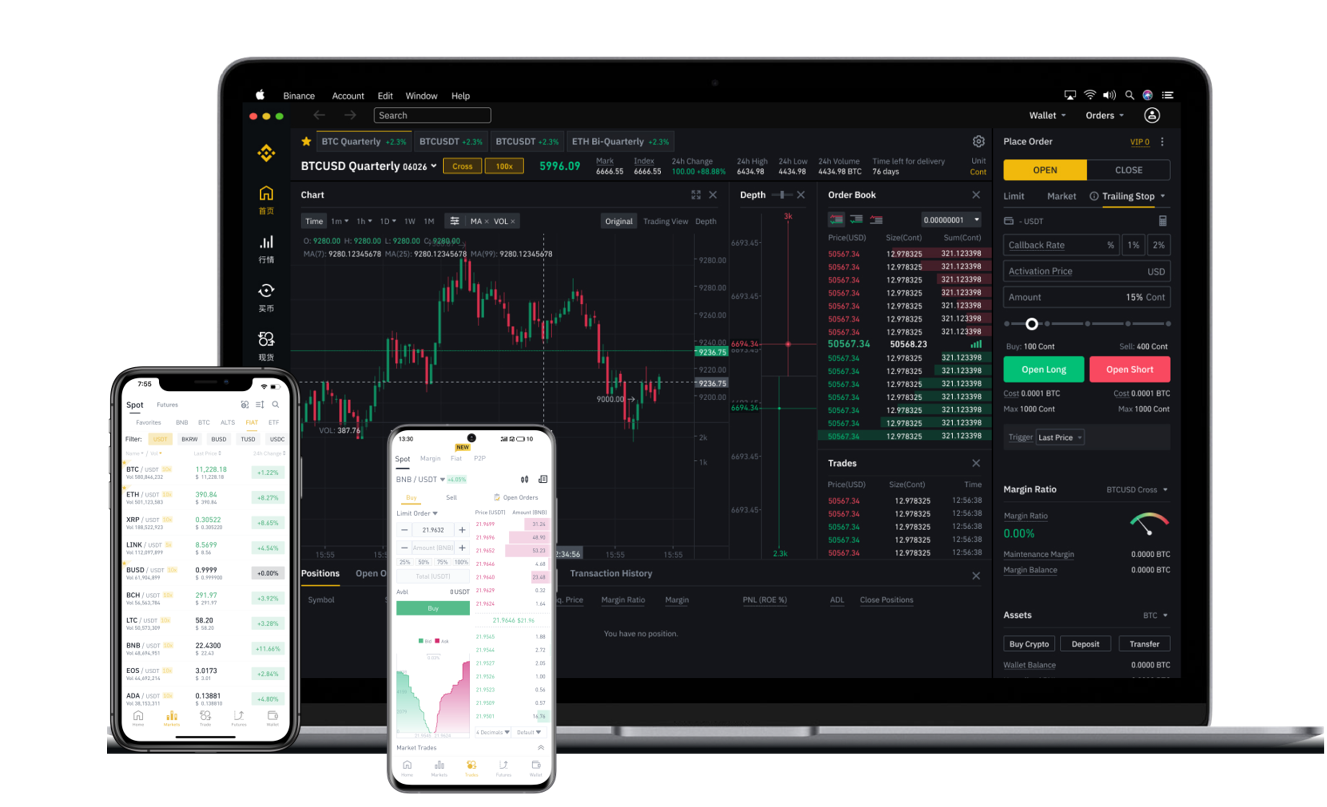

Binance Futures is among the most liquid and popular derivative exchanges in the cryptocurrency market. However, trading these contracts requires a firm grasp of the specific rules and mechanics that govern positions, risk, and funding. Without understanding these foundational contract rules, traders—especially newcomers—can quickly face unexpected liquidations or unnecessary costs. This article breaks down the essential Binance futures contract rules, focusing on margin, leverage, position limits, and the critical funding rate mechanism.
First, traders must understand the distinction between USDT-Margined and Coin-Margined contracts. On Binance, USDT-M futures settle in Tether (USDT), meaning your profits and losses are calculated and paid in a stablecoin. In contrast, Coin-Margined futures are settled in the base cryptocurrency itself, such as BTC for a BTCUSD contract. This choice impacts how your collateral is valued and how you manage your risk. Each contract type also has its own set of specifications regarding tick size, minimum notional value, and maximum order size, which are detailed in the specific contract's "Contract Specs" on the exchange.
Leverage and margin are perhaps the most fundamental rules to master. Binance offers adjustable leverage, ranging from 1x up to 125x depending on the asset pair. However, high leverage does not mean you should use it fully. The key rule here is the "Maintenance Margin Ratio" (MMR), which dictates the level at which your position will be liquidated. If your margin balance falls below this threshold, due to adverse price movement, the system will close your position. It is crucial to always monitor your "Liquidation Price," and the rule of thumb is to never enter a position without knowing exactly how much price movement will cause you to lose your collateral.
Another vital rule concerns the Funding Rate mechanism in perpetual futures contracts. Unlike traditional futures with an expiration date, perpetual contracts use a periodic payment between long and short traders to keep the contract price close to the spot index price. Every 8 hours (at 00:00, 08:00, and 16:00 UTC), a funding payment is exchanged. If the rate is positive, long positions pay short positions; if negative, short positions pay longs. This rule is not a fee paid to Binance but a market-driven cost or profit. A common mistake is ignoring the funding rate; holding a large position through a high positive funding rate for several days can erode profits even if the market price moves in your favor.
Position and order limits are also part of the core rules. Binance imposes both a maximum leverage limit and a maximum position size (notional value) per account for each contract pair. For example, you cannot open a single position worth $10 million in BTC on high leverage without proper risk controls. Additionally, limits such as the "Number of Open Orders" and the "Order Book Depth" are in place to prevent market manipulation. Understanding these rules helps traders avoid getting "stuck" in a position they cannot adequately scale into or out of.
Finally, the liquidation system itself has specific rules. Binance employs a "Partial Liquidation" mechanism. Instead of closing the entire position at once when the MMR is breached, the system might reduce the position size just enough to bring the margin ratio back above the requirement. This rule is designed to prevent cascading liquidations and gives traders a chance to add margin. However, once a position enters the liquidation queue, the trader cannot manually close a portion of it; the system takes over automatically. To avoid forced liquidations, traders should set stop-loss orders and carefully manage their "Entry Price" relative to their capital.
In summary, success on Binance Futures is built on a rigorous understanding of its contract rules. From differentiating between USDT-M and Coin-M contracts, understanding the MMR and leverage relationship, to grasping the funding rate schedule and partial liquidation logic, each rule directly affects your trading outcomes. By mastering these foundational elements, you can better manage risk, avoid costly mistakes, and utilize the platform's powerful features with confidence.